
Why Humboldt County is Incredible for Photographers!
May 23, 2026
Humboldt County, California: A Photographer's Paradise at the Edge of the World
There are places in the world that seem almost too beautiful to be real — where ancient forests press against wild coastlines, where morning fog drifts through cathedral-like groves, and where the light does things you've never seen before. Humboldt County, tucked into the remote northern coast of California, is one of those places. For photographers, it isn't just a destination. It's a calling.
---
The Forests: Shooting Among Giants
Humboldt is home to some of the last old-growth coast redwood forests on Earth, and no camera can fully prepare you for the moment you step beneath them. These trees — the tallest living organisms on the planet — create an environment unlike anything else in the natural world.
**Humboldt Redwoods State Park** contains the famous Avenue of the Giants, a 31-mile stretch of highway winding beneath a continuous canopy of towering redwoods. For photographers, this corridor is endlessly rewarding. Shoot early morning when shafts of golden light pierce the fog and illuminate the forest floor in dramatic, almost otherworldly rays. These "god rays" or crepuscular rays are a signature of Humboldt's misty mornings and require little more than a wide-angle lens and a willingness to wake up before sunrise.
The **Prairie Creek Redwoods State Park** is another must-visit, home to elk that roam freely through the trees and meadows. The combination of massive redwood trunks, lush fern undergrowth, and Roosevelt elk in the frame is a composition you simply cannot manufacture anywhere else.
**Fern Canyon** — carved by Home Creek over millennia — is arguably one of the most photographed natural features in Northern California for good reason. Its sheer walls are blanketed from floor to rim in five-finger ferns, creating a lush green corridor that feels prehistoric. The canyon's narrow passage and soft, diffused light make it ideal for detail shots, environmental portraits, and wide-angle landscape work. Steven Spielberg thought it perfect enough to film scenes from *Jurassic Park 2* here, and your camera will understand why.
Tips for Forest Photography in Humboldt
- **Embrace overcast days.** The soft, even light on cloudy days eliminates harsh shadows and brings out the rich greens and textures of the forest floor far better than direct sunlight.
- **Use a tripod.** The forest canopy limits light significantly. Long exposures let you capture silky water in creek shots and render the environment with full depth and detail.
- **Go wide and go close.** Alternate between sweeping wide shots that convey the impossible scale of the trees and tight macro shots of moss, mushrooms, and fern fronds. Both tell the Humboldt story.
---
The Coast: Where the Pacific Meets Something Primal
The Humboldt coastline is nothing like the warm, gentle beaches of Southern California. It is rugged, dramatic, and untamed — and for photographers, that's the whole point.
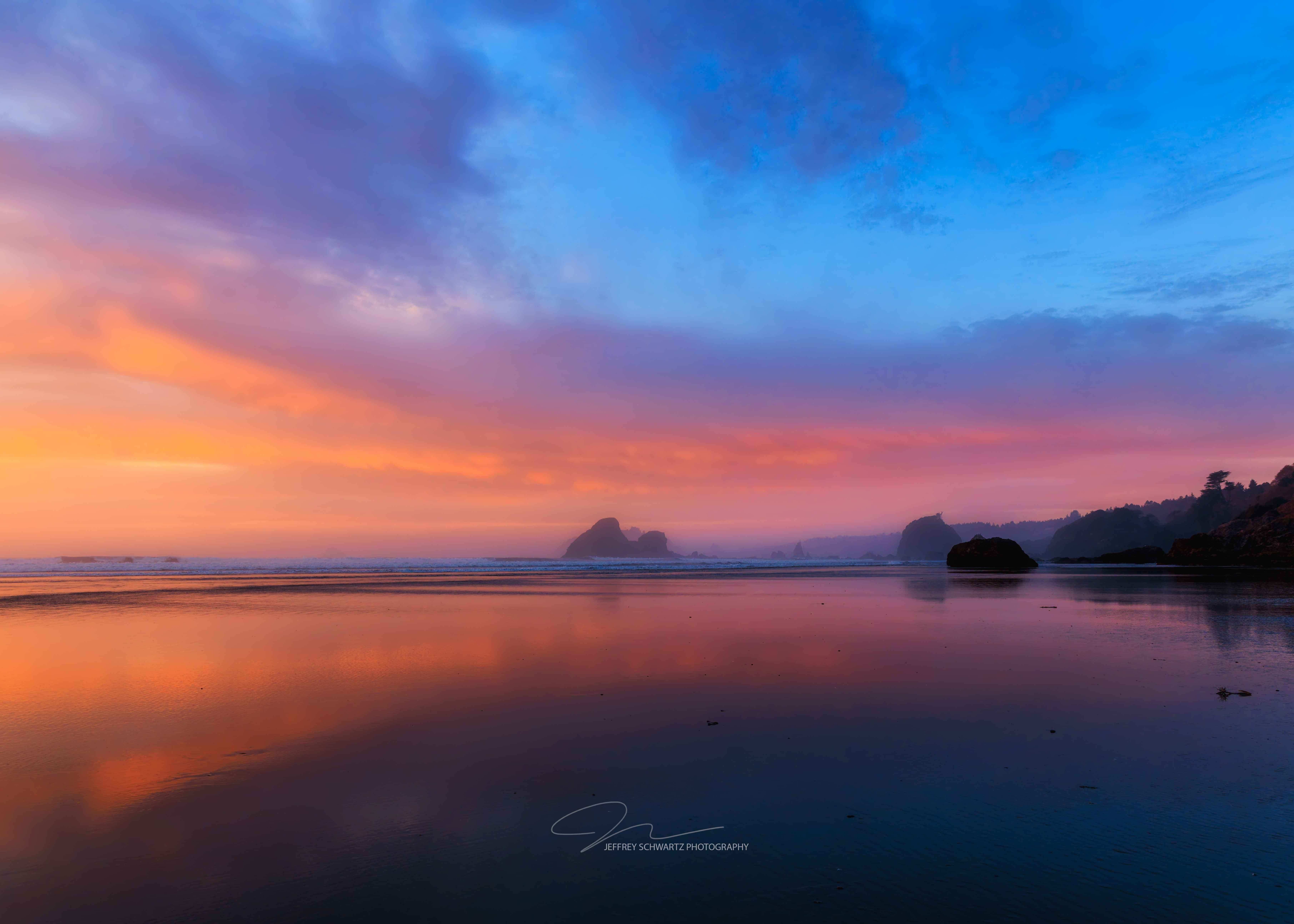
**Trinidad State Beach** is perhaps the crown jewel of the Humboldt coast. The beach sits just south of the charming fishing village of Trinidad and is framed by dramatic sea stacks — massive rock formations rising from the surf — and a forested bluff above. At golden hour, the warm light catches the sea stacks and turns the wet sand into a mirror reflecting the sky in shades of orange, pink, and violet. It's the kind of scene that makes you feel like you're shooting on another planet.
The **Trinidad Head Trail** above town rewards hikers with sweeping panoramic views of the coastline, the harbor, and on clear days, views stretching north and south for miles. This is your shot for dramatic seascape compositions, especially when the Pacific sends in heavy swells and spray explodes off the rocks below.
**Moonstone Beach** near Trinidad offers smooth, colorful agates and moonstones scattered across dark volcanic sand — a detail photographer's dream. Get low, get close, and let the wave wash over the stones for that glassy, reflective look.
Further south, **Humboldt Bay** — the largest bay on the California coast north of San Francisco — provides a completely different photographic palette. The bay is a critical stop on the Pacific Flyway, and the result is extraordinary bird photography opportunities. Great blue herons, brown pelicans, egrets, and enormous seasonal gatherings of shorebirds make the bay a wildlife photographer's treasure trove.
**Black Sand Beach at Shelter Cove** in the Lost Coast region is one of the most striking and isolated beaches in the state. Miles of jet-black volcanic sand stretch beneath towering bluffs with almost no development in sight. The contrast of the dark sand, white surf, and green headlands creates compositions that feel genuinely unique on Earth.
Tips for Coastal Photography in Humboldt
- **Shoot at golden hour and blue hour.** The Humboldt coast transforms at the edges of the day. Midday light flattens the drama out of the sea stacks and surf; early morning and late evening are where the magic lives.
- **Watch the tides.** Many coastal access points change dramatically with the tide. Low tide reveals tide pools, sea caves, and rock formations that disappear underwater at high tide.
- **Bring lens protection.** Sea spray can travel farther than you expect, especially near the rocks at Trinidad. A UV filter and a microfiber cloth in your pocket will save you more than once.
---
Portrait Photography: Using Humboldt as Your Studio
Humboldt County has quietly become a destination for portrait photographers who want something beyond the predictable urban backdrop. The natural environment here provides a variety of settings that add genuine depth, atmosphere, and story to portraits.
**Redwood forest portraits** are extraordinary for several reasons. The scale of the trees provides instant context and creates a sense of wonder — a subject standing at the base of a 300-foot redwood is simultaneously dwarfed and elevated. The forest floor's soft, filtered light is remarkably flattering, acting like a natural giant softbox that eliminates the harsh shadows you'd fight in open daylight. Couples shoots, family portraits, and fine art editorial work all translate beautifully in the redwoods.
**Fern Canyon portraits** are a favorite for editorial and fashion photographers who want a lush, otherworldly backdrop. The green walls and narrow canyon create natural leading lines that draw the eye directly to the subject, and the cool, diffused light is as close to studio-quality as nature gets.
**Beach and coastal portraits** at Trinidad or nearby **Clam Beach** bring a moody, cinematic quality that's hard to replicate. Fog rolling in off the Pacific creates a natural haze that softens backgrounds beautifully. Subjects photographed on a misty Humboldt beach, with sea stacks emerging from the fog behind them, tend to look like they belong in a film. The wind-blown hair, the sweeping coastal grass, the raw and untouched feel of the environment — it all communicates something authentic and powerful.
**Trinidad Village** itself, with its colorful fishing boats, weathered docks, and historic lighthouse, offers a charming and characterful setting for portrait work with a nautical, small-town feel.
---
Bonus Reasons Humboldt is a Photographer's Dream
**The weather creates atmosphere.** Humboldt's near-constant marine layer and morning fog are not obstacles — they are assets. Fog transforms an ordinary forest scene into something ethereal. It softens backgrounds, adds depth and mystery, and makes colors glow. Photographers who understand how to work with fog rather than against it will find Humboldt endlessly generous.
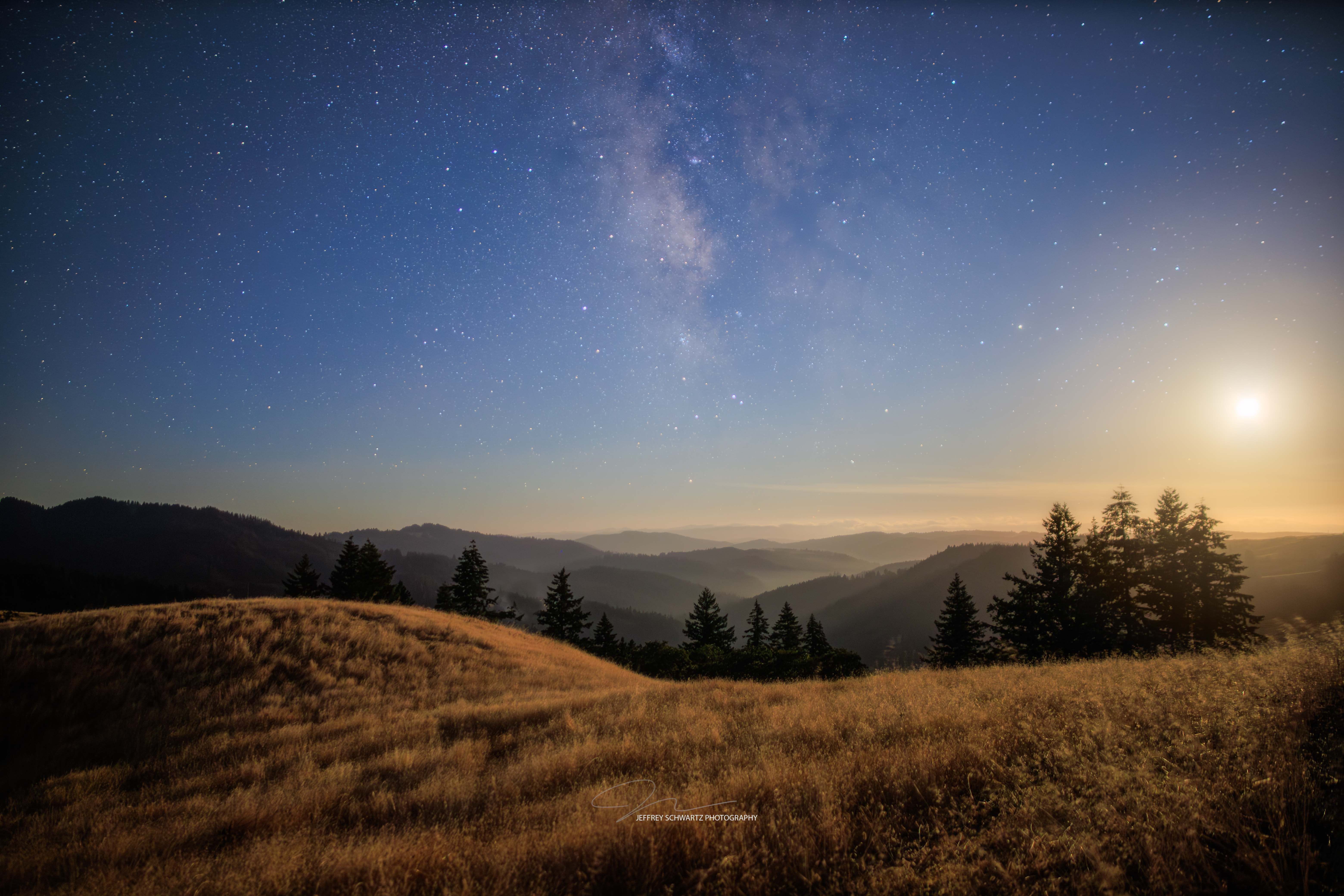
**The night sky.** Get away from Eureka and Arcata and you're in some of the darkest skies in California. The Lost Coast, in particular, offers exceptional Milky Way and star trail opportunities, especially in summer months. Pair a foreground of redwood silhouettes or crashing surf with a star-filled sky and you have images that will stop people in their tracks.
**Minimal crowds.** Humboldt's relative remoteness means you're unlikely to be jostling for position at a popular overlook. Many of the most spectacular locations here receive a fraction of the traffic that similar spots in more accessible parks endure. You can take your time, set up your shot properly, and shoot without pressure.
**The wildlife.** Beyond the elk of Prairie Creek, Humboldt offers black bears, river otters, harbor seals, California sea lions, and during the right seasons, migrating gray whales just offshore. The birding alone — from the ancient marbled murrelets nesting in old-growth to the spectacular shorebird aggregations on the bay — is world-class.
**The small towns.** Ferndale, a Victorian village in the Eel River valley south of Eureka, is a remarkably well-preserved 19th-century town that looks like a film set. Colorful Victorian architecture, dairy farms rolling up into the hills, and a charming main street make it a wonderful location for documentary-style street photography and environmental portraits.
---
A Final Word
Humboldt County rewards the patient photographer — the one willing to wait for the light, willing to get up before dawn, willing to drive down a gravel road to see what's at the end of it. It is not a place that announces itself loudly. It reveals itself slowly, in layers, the way a foggy morning eventually gives way to something golden and surprising.
Bring extra memory cards. Bring a rain jacket. And bring far more time than you think you'll need, because once you've stood in Fern Canyon at first light, or watched the sun drop behind the sea stacks at Trinidad, or looked straight up into the canopy of a two-thousand-year-old redwood tree — you will not want to leave.
Humboldt County doesn't just give you great photographs. It reminds you why you picked up a camera in the first place.